
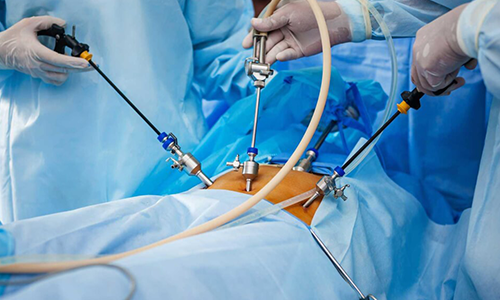
Laparoscopic surgery is a modern form of minimally invasive surgery used to treat conditions within the abdomen and pelvis. Instead of creating a large incision, surgeons make several very small cuts, each typically less than half an inch long. Through one of these openings, they insert a laparoscope—a slender tube equipped with a light source and a high-resolution camera. This device sends real-time images to a monitor, allowing the surgical team to view internal organs without the need for a wide, open incision.
Additional small openings are used to insert specialized surgical instruments designed to manipulate tissue, remove structures, or perform repairs. Because the incisions are so small compared to the 6- to 12-inch cut required for traditional open surgery, laparoscopic procedures generally result in less pain, reduced scarring, faster recovery times, and shorter hospital stays.
This technique is often referred to as “keyhole surgery,” a nickname inspired by the tiny entry points used to access the surgical area. Laparoscopic methods are commonly used for procedures such as gallbladder removal, hernia repairs, and gynecologic operations. As technology continues to advance, laparoscopic surgery has become a standard approach for many conditions, offering patients a safer and more comfortable alternative to open surgery.