
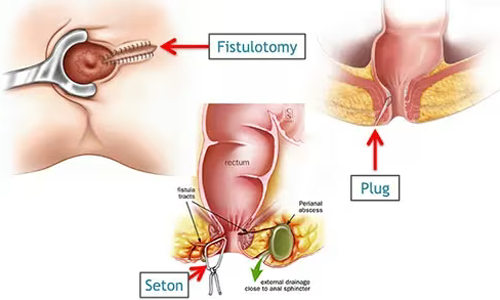
An anal fistula is an abnormal tunnel that forms between an infected gland inside the anus and an opening on the skin near the anal area. The anus is the body’s external opening for the passage of stool. Just inside the anal canal, there are several small glands that produce mucus, which helps lubricate the passage of feces. Sometimes, these glands can become blocked, allowing bacteria to multiply and cause an infection, which may result in the formation of an abscess—a painful, pus-filled swelling.
If the abscess is not fully treated, it can create a persistent connection from the gland to the skin surface, forming a fistula. Anal fistulas often cause discomfort, pain, swelling, and sometimes discharge of pus or blood from the external opening. Patients may also experience irritation of the surrounding skin. The condition can be persistent, and spontaneous healing is uncommon, making medical or surgical intervention necessary in most cases.
Treatment of an anal fistula typically involves procedures to remove the infected tissue and close the abnormal tunnel while preserving the function of the anal sphincter. Prompt management is important to prevent recurrent infections, chronic drainage, and further complications. Early diagnosis and appropriate surgical care often lead to better outcomes and relief from the symptoms associated with this condition.